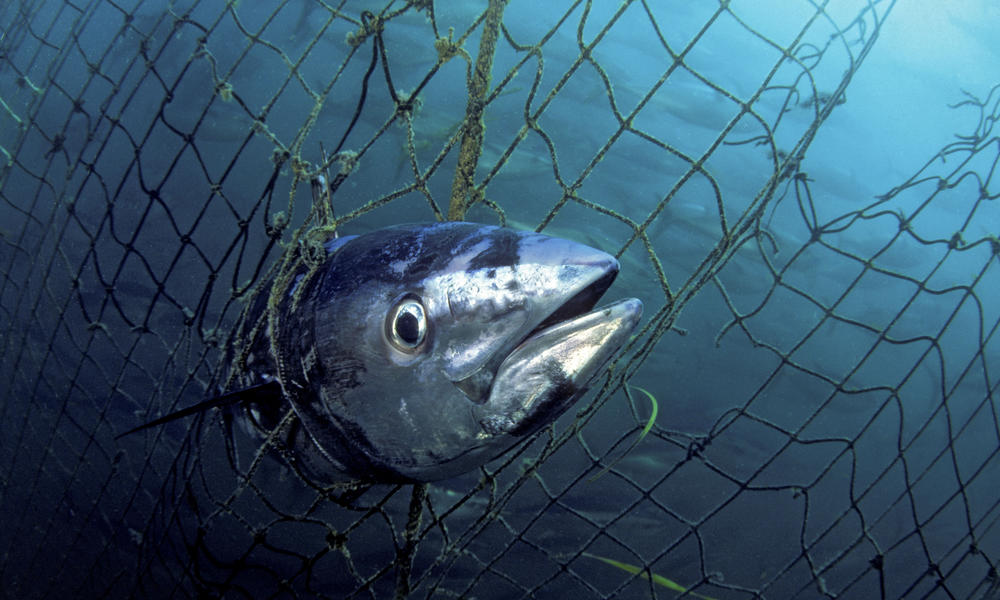
The Effects of Over-Fishing
By: Rachael Hirst
Around the world, seafood makes up a significant part of the average person's diet. For example, in the United States alone, Americans consume over 5 billion pounds of seafood a year! The problem is that with this increased demand comes a high amount of stress on ocean fish populations. About 85% of global fish stocks are in decline due to a combination of increased efficiency, growing human population, and globalization of the fishing industry.
There are a variety of reasons that we should be concerned about over fishing, including both environmental and economical issues. From an environmental standpoint, the over harvesting of fish decreases marine biodiversity, affects predator-prey relationships, and sends a ripple effect through the entire food web. The loss of fish makes the environment less resilient to disturbances and more susceptible to damage. Furthermore, as fish populations decrease, their preys' populations will grow of control, and predator populations will begin to die off without a sufficient food supply. About 70% of the Earth is made of water, meaning that marine life has a large impact on the environment. With some species of fish, like the blue-fin tuna, getting dangerously close to extinction, there's a possibility of extremely serious repercussions on the environment.
Not only will over fishing negatively affect the environment, but eventually it will also affect our economy and people. As fish populations begin to die out, fishermen will begin to lose their jobs since marine habitats can longer support the fishing industry. Additionally, many communities and towns on the coastline will be hit with a wave of poverty as the source of their main income is depleted.
Although over fishing is a huge problem, there are many solutions that can help. One main cause of over fishing is a lack of government enforcement and laws. Groups like the World Wildlife Fund have formed to create management protocols and regulate fishing habits. Another cause is lack of consumer knowledge. By spreading awareness about over hunted species of fish, consumers can become more educated about the fish they buy and the ones that are endangered. Personally, I like seafood, but it's important to become more knowledgeable about the best kinds of fish to buy that don't put more stress on our already depleted fish sources. What do you think about over fishing? What are some ways that we can stop this problem before it becomes too late?
Sources:


20 comments:
When discussing environmental issues, I, and many others, gravitate to topics that affect land organisms, ecosystems and biomes. However, we frequently ignore one of the largest biomes, if not the largest, earthly biomes: marine biomes. Consequently, I'm glad you brought greater awareness to how humans can negatively affect marine environments. I, too, am an avid seafood eater, enjoying a variety of different types of marine organisms. I never gave thought to the fact that these meals that I eat are one of thousands, if not millions, around the United States, meaning that millions of marine organisms have also died. I appreciate that you are bringing awareness to overfishing. Perhaps we could reduce the amount of fish fisherman are allowed to catch a year in order to allow the marine populations to replenish themselves.
Although a lot of food that is prepared around the world today is from marine ecosystems, I believe people can cut down a little bit of the fishing daily. The consequences of littering and pollution is affecting the marine life and causing biodiversity in these ecosystems to decrease exponentially. Overfishing is a big problem because the marine ecosystem is the biggest of them all due to the large masses of ocean water we have. We must, as a population, really focus on that trash goes where it needs to go instead of in bodies of water and make sure that we keep our fishing habitats to a relative minimum. After all, the world will not even be close to surviving without the help of marine life.
I think overharvesting is a huge problem within environments everywhere. Overfishing falls within this category, and it is essential that people realize this. Without different types of sea creatures that satisfy the needs of other organisms around them, many food webs will change and possibly die out. I believe that we can limit overfishing, but we can't completely get rid of it. Governments can make regulations that set the amount and type of fish that can be captured by fishermen or other people.
I'm not sure if fisheries or fish farms were created with the intention of preventing overharvesting, but maybe supporting those rather than those caught from a body of water could help cut down on overfishing. Another way could cut down overharvesting is to simply consume less meat and seafood. I don't think you'd necessarily need to cut it out entirely, but maybe try to go for a vegetarian meal option once a week.
Personally, I love seafood but over-harvesting of marine life is one of the most undertalked topics in our society. Water fuels our world and the million of species that live in water are just as important to daily life. If we go about fishing the way we do right now, the billions of living organisms will die off over time, much like many of the other resources humans abuse. Though seafood is one of th main sources of food for many people, we need to find a more sustainable option if we want to keep our way of life.
Over harvesting is an important issue that needs to be further spread to the public. It can even lead to the extinction of species! THe repercussions of overharvesting fish may be detrimental to the environment and our economy. I believe that if we reinforce laws to restrict the amount of fishing per year, we can start to increase the number of fish populations, or at least not decrease them. Spreading the word about this problem will also be beneficial. As for the people who have jobs in this industry, I would not want them to lose their jobs, but putting new restrictions on what they can fish may change how they perform their jobs. Overharvesting needs to be stabilized.
The problem of overharvesting fish had never crossed my mind until I read your blog. I love eating seafood so it never occurred to me. This problem relates to the issue of the growth of the human population as you stated in your blog. I believe if we somehow get this under-control, the demand for seafood will decrease. Controlling the population of humans will also fix many other overharvesting problems, not just related to the ocean.
I am not a huge fan of seafood and especially after reading your article I am glad I don’t eat seafood often. I think what people tend to forget is how badly it can effect our environment AND economy. Over harvesting can cause so many problems in the ecosystem including loss of biodiversity. If the fish population dies out then the fishers will lose their jobs and I am so glad you pointed that out! I believe if we begin to control our diets now than we can save the world.
This is an amazing post! People need to be more aware of the seafood they’re eating. They need to know the environment and economic impacts of it and control their diets. This a worldwide issue and not many people know about it. Spreading awareness and the enforcing of government laws would help to reduce the problems associated with fishing and seafood.
I never realized over harvesting fish was such a big issue! I think the government needs to play a bigger part in stopping this problem caused by humans. For example, they can create and enforce laws that will limit the fishing seasons and size of fish that can be taken out of the ocean. This will allow the fish to increase their population size to a rate greater than we are fishing them. Spreading awareness of this will help more people realize that overharvesting fish has become such a great issue.
This is a great blog, but I don’t agree with everything this has to say. I believe some types of fish are over harvested, but at the same time many many species are way above what the population should be because we don’t or cant keep the population controlled. I believe that there should be a better limit on taking fish, but I think if it stayed the same the fish would be the same.
This blog pointed out some good facts about overfishing. I didn’t know that overfishing was a problem before reading this, and now I know. We need our governments to step in and enforce fishing laws and regulations more strictly, or else, people will keep on overfishing. Also, there should be a thing called fishing season, just like deer season and all that, so that we can give the marine animals a chance to bring their numbers back up every year after we catch fish.
Although I’m not a huge fan of the way fish taste or even smell, that doesn’t mean I don’t care if they were harmed. As you said in your blog, the extinction of even just one fish can have numerous repercussions, and I like how you mentioned that the earth is 70% water. Meaning that if overfishing became an irreversible problem, then that’s 70% of our ecosystems damaged. I feel like what you said about consumer knowledge is a good start. If people know the process of how they got that fish and the repercussions it could lead to, maybe they would turn their attention to a more abundant species of fish giving the endangered species time to rebuild.
This article was very informative about the effects of overfishing. While I have previously heard about overfishing, I never knew the depths of the problem. Placing regulations on the fishing industry and reducing our fish and seafood intake will allow for sustainable fishing practices to be implemented, allowing future generations to continue to see the benefits fishes provide.
What an interesting post! I believe most people know about some form of over harvesting but personally when i think of over harvesting I never think of fish. I usually think of terrestrial crops and animals. Because of this fact, I believe that, as you said, one of the major ways in which we may help solve the issue of over harvesting of marine life would be to educate others as well as ourselves. If marine life over harvesting was more talked about and the image changed from land to sea, and we informed ourselves on fish that aren’t as susceptible to endangerment or extinction, we could make a significant positive impact on the matter.
Thats a very interesting argument about overharvesting. The main way to help stop overharvesting is to educate people on the problem. If we discussed this on more of national level then I believe things could be improved. This was a very interesting read thank you.
Thats a very interesting argument about overharvesting. The main way to help stop overharvesting is to educate people on the problem. If we discussed this on more of national level then I believe things could be improved. This was a very interesting read thank you.
I appreciate your real-life example of biodiversity loss that we talked about a couple of units ago. Health-wise, seafood is commonly praised for its benefits, but it's innately true that humans rarely focus on environmental ramifications. Tying in today's fishing activity, there should be better ways of regulating commercial fishing levels to prevent overfishing and species diversity loss.
Wow this blog was very interesting because I didn’t really know what harm overfishing can do. I didn’t really know that Americans eat over 5 billion pounds of fish each year because that would explain why 85% of global fish are declining. I also find it interesting that overfishing can affect the economy as well as the environment. I like how you give solutions towards the problem of overfishing so that we can all be held accountable towards this problem. This reminds me that we need to take more care of our oceans and marine life, especially fish all over the world.
This subject goes back to the idea of managing resources in the natural environment, choosing what to use and what to leave alone. Often times people look at vast resources like the amount of fish in the ocean, which is often used an an analogy for abundance, and see that as an inextinguible resource, but as you pointed out, the loss of biodiversity in regard to seafood is a true and present threat. Similarly, the loss of this diversity can be attributed to the destruction of marine ecosystems and an upset in the way our ocean works, perhaps creating dangerous abundance of one organism or scarcity of others. You presented a very informative piece, thank you.
Post a Comment